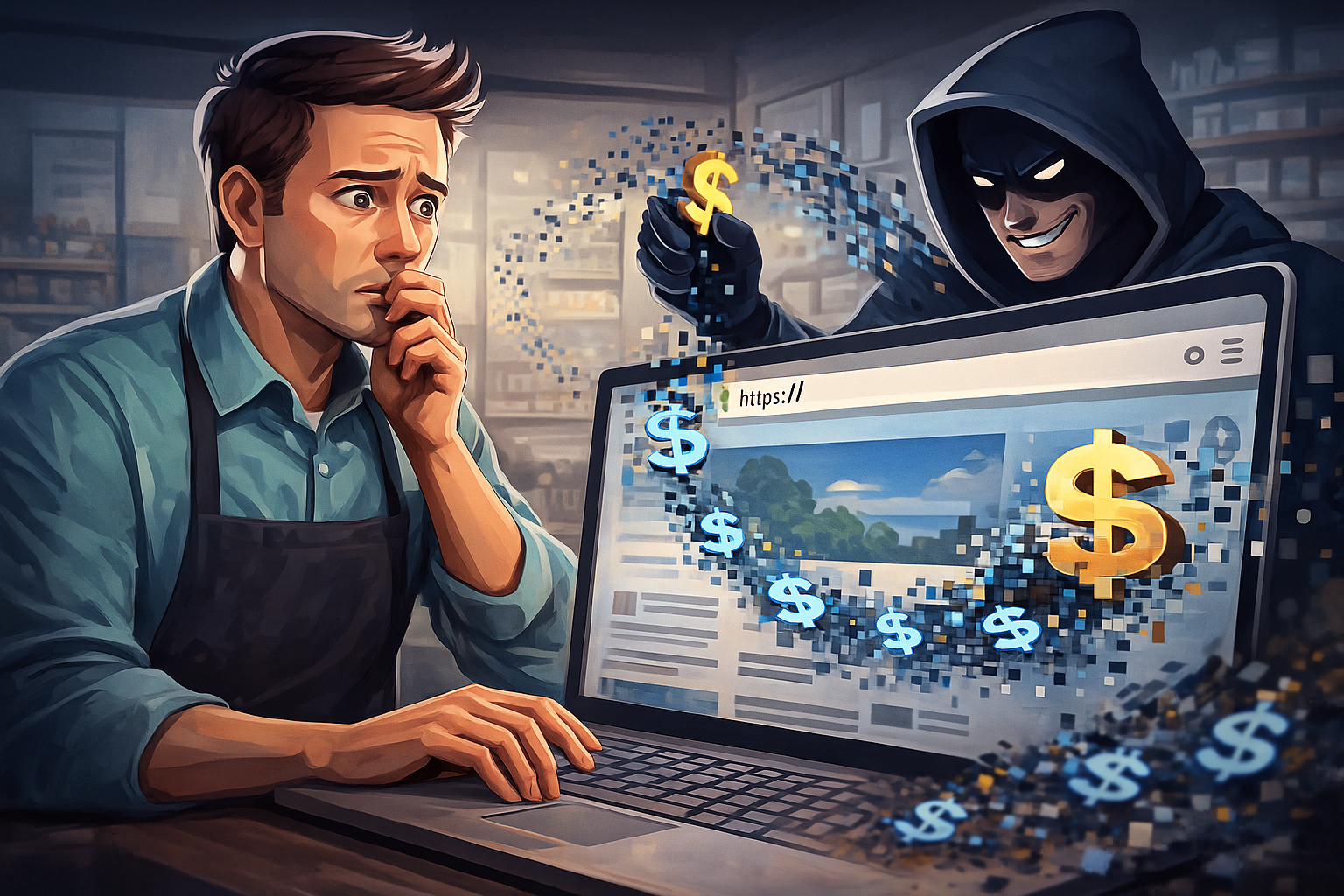
Most store owners discover content theft by accident. A customer mentions they saw your product on a "different site." A reverse image search reveals your photos plastered across storefronts you've never heard of. By then, the visible problem (someone copied your stuff) is masking damage that's already been done.
The SEO Drain
When your product descriptions, images, and page content appear on multiple sites, search engines face a decision: which version is the original? While Google has gotten better at identifying authoritative sources, duplicate content still creates friction. Your pages may not tank overnight, but they're competing against noise you never asked for.
Worse, if clone sites are aggressive with backlinks or paid traffic, they can siphon visibility in ways that are hard to trace. You might notice a slow decline in organic traffic without ever connecting it to the knockoff store that scraped your catalog three months ago.
And recovery isn't instant. Even after you've filed takedowns and had fraudulent content removed, it takes time for search engines to recrawl, reindex, and restore your rankings. Months of momentum can evaporate while you're cleaning up someone else's mess.
Trust and Brand Dilution
Here's the part that keeps store owners up at night: when a customer gets scammed by a site using your branding, they blame you. They don't know—or care—that it wasn't actually your store. They just know they paid for something that never arrived, and your logo was on the page.
Negative reviews start appearing. Social media complaints tag your brand. Chargebacks hit accounts you don't control, but the reputational fallout lands on your doorstep. The scammer has moved on to the next target. You're left explaining that no, that wasn't us, and watching potential customers hesitate.
That hesitation is the silent killer. The shopper who almost bought but thought "wait, is this the real site?" never shows up in your analytics. You'll never know how many sales you lost to doubt you didn't create.
The Revenue You Don't See Leaving
Clone sites selling counterfeits or undercutting your prices create direct revenue loss. But that's the obvious part. The less obvious part is the ad spend you're wasting.
If a fraudulent site is bidding on your brand terms or targeting the same audiences with your stolen content, you're paying more per click to compete against yourself. Your carefully crafted product copy is now working for someone else's margins.
Affiliate and influencer traffic gets hijacked mid-funnel too. A potential customer clicks through from a review or recommendation, lands on a clone site instead of yours, and the sale—along with the trust that influencer built—goes to a scammer.
The Compounding Problem
Content thieves don't stop at one page. Automated scrapers can copy entire catalogs in hours. Your product images, descriptions, pricing, even your About page, can be replicated across dozens of fraudulent storefronts before you know anything is wrong.
Stolen content gets resold and syndicated. One scrape becomes ten clone sites. Those sites get scraped by other bad actors. Your content spreads through networks you can't see, each copy making the cleanup harder and more expensive.
The longer it goes undetected, the deeper the damage. What starts as a nuisance becomes a crisis that requires legal action, dedicated staff time, and months of remediation.
What Proactive Protection Looks Like
The store owners who avoid this spiral have one thing in common: they catch content theft early. They're not waiting for customer complaints or stumbling across clones by accident. They have systems watching for unauthorized use of their content, alerting them before the damage compounds.
Continuous monitoring means faster takedowns. Faster takedowns mean less SEO erosion, fewer scammed customers, and far less time spent in cleanup mode. The cost of prevention is a fraction of the cost of recovery.
If you've been putting off brand protection because the problem felt abstract, consider what you'd do if you discovered tomorrow that your entire catalog was live on a dozen sites you don't control. Then ask whether you'd rather find out now—or after the damage is done.